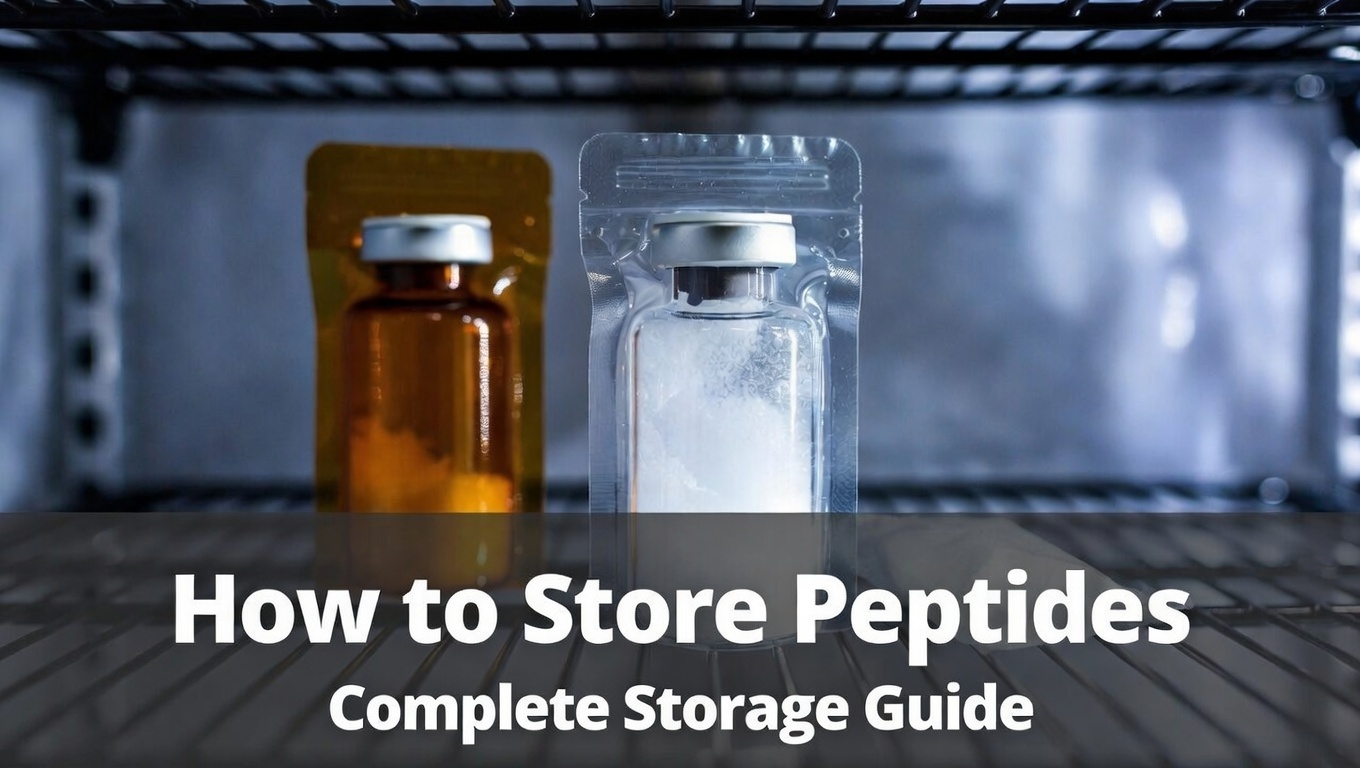
Peptides are fragile molecules. Expose them to the wrong temperature, moisture, or light — and they degrade, sometimes within days. To store peptides correctly, keep lyophilized (powder) forms sealed at -20°C or below in a dark, dry environment, and store reconstituted peptides refrigerated at 2–8°C, using them within 3–4 weeks. Whether you're working with dry powder or a mixed solution, proper storage of peptides is the single biggest factor in preserving their stability and shelf life.
This guide covers exactly how to store peptides in every form — before and after reconstitution — so nothing goes to waste.
Why Proper Peptide Storage Matters
Peptides degrade through three main pathways: hydrolysis (water breaks bonds), oxidation (oxygen damages amino acids), and aggregation (molecules clump together). These reactions accelerate with heat, humidity, and light exposure.
Poor storage doesn't just reduce potency — it can make peptides completely unusable. The difference between a peptide lasting months versus years comes down to how you handle storage.
Poor storage doesn't just reduce potency — it can make peptides completely unusable. The difference between a peptide lasting months versus years comes down to how you handle storage.
How to Store Lyophilized Peptides (Powder Form)
Lyophilized (freeze-dried) peptides are the most stable form because the water has been removed during manufacturing. Still, they aren't indestructible.
Temperature: Store lyophilized peptides at -20°C (-4°F) for long-term storage. For extended periods beyond a year, -80°C (-112°F) is ideal. Short-term storage at 4°C (39°F) is acceptable if you plan to use them within a few weeks.
Moisture protection: Even in powder form, peptides absorb moisture from the air. Always keep them in a tightly sealed vial, and use desiccant packs inside the storage container. Let the vial reach room temperature before opening — this prevents condensation from forming inside.
Light exposure: UV and visible light can oxidize sensitive amino acid residues. Store vials in a dark location or wrap them in aluminum foil.
Air exposure: Minimize the number of times you open the vial. Each exposure introduces oxygen and humidity. If possible, store peptides under an inert gas like nitrogen or argon.
How long do peptides last in powder form? Under proper conditions at -20°C, most lyophilized peptides remain stable for 2–5 years. At -80°C, some remain viable for a decade or longer. However, peptides containing methionine, cysteine, or tryptophan residues are more prone to oxidation and may have shorter shelf lives even in lyophilized form — so airtight sealing and desiccation become even more critical for these sequences.
Temperature: Store lyophilized peptides at -20°C (-4°F) for long-term storage. For extended periods beyond a year, -80°C (-112°F) is ideal. Short-term storage at 4°C (39°F) is acceptable if you plan to use them within a few weeks.
Moisture protection: Even in powder form, peptides absorb moisture from the air. Always keep them in a tightly sealed vial, and use desiccant packs inside the storage container. Let the vial reach room temperature before opening — this prevents condensation from forming inside.
Light exposure: UV and visible light can oxidize sensitive amino acid residues. Store vials in a dark location or wrap them in aluminum foil.
Air exposure: Minimize the number of times you open the vial. Each exposure introduces oxygen and humidity. If possible, store peptides under an inert gas like nitrogen or argon.
How long do peptides last in powder form? Under proper conditions at -20°C, most lyophilized peptides remain stable for 2–5 years. At -80°C, some remain viable for a decade or longer. However, peptides containing methionine, cysteine, or tryptophan residues are more prone to oxidation and may have shorter shelf lives even in lyophilized form — so airtight sealing and desiccation become even more critical for these sequences.
How to Store Peptides Before Reconstitution
If you've purchased peptides but aren't ready to use them yet, keep them sealed in their original packaging at -20°C or below. Do not open the vial until you're ready to reconstitute.
The key rules for pre-reconstitution storage are simple: keep them cold, keep them dry, and keep them sealed. Avoid frost-free freezers — their automatic defrost cycles cause temperature fluctuations that can degrade peptides over time.
When sourcing peptides, quality matters just as much as storage. Starting with high-purity research peptides ensures you're preserving a product that was manufactured and tested to proper standards.
The key rules for pre-reconstitution storage are simple: keep them cold, keep them dry, and keep them sealed. Avoid frost-free freezers — their automatic defrost cycles cause temperature fluctuations that can degrade peptides over time.
When sourcing peptides, quality matters just as much as storage. Starting with high-purity research peptides ensures you're preserving a product that was manufactured and tested to proper standards.
How to Store Reconstituted Peptides
Once peptides are mixed with a solvent (typically bacteriostatic water), they become significantly less stable. Reconstituted peptides degrade much faster than their lyophilized counterparts.
Refrigeration (2–8°C): Reconstituted peptides should be stored in the refrigerator and used within 3–4 weeks for most compounds. Do peptides need to be refrigerated after mixing? Yes — leaving reconstituted peptides at room temperature accelerates degradation rapidly.
Freezing reconstituted peptides: If you need longer storage, freeze aliquots at -20°C. Frozen reconstituted peptides can remain stable for 3–4 months. At -80°C, stability can extend up to a year.
Avoid freeze-thaw cycles: Every time you freeze, thaw, and refreeze a peptide solution, you risk aggregation and degradation. The solution is to divide your reconstituted peptide into single-use aliquots before freezing. This way, you only thaw what you need.
Sterile technique: Always use sterile syringes, alcohol-swabbed vial tops, and clean handling practices. Contamination introduces bacteria that break down peptides in solution.
Solvent matters: Use bacteriostatic water for multi-dose vials — the benzyl alcohol preservative helps prevent microbial growth during storage. Sterile water is suitable for single-use preparations but offers no preservative protection.
Refrigeration (2–8°C): Reconstituted peptides should be stored in the refrigerator and used within 3–4 weeks for most compounds. Do peptides need to be refrigerated after mixing? Yes — leaving reconstituted peptides at room temperature accelerates degradation rapidly.
Freezing reconstituted peptides: If you need longer storage, freeze aliquots at -20°C. Frozen reconstituted peptides can remain stable for 3–4 months. At -80°C, stability can extend up to a year.
Avoid freeze-thaw cycles: Every time you freeze, thaw, and refreeze a peptide solution, you risk aggregation and degradation. The solution is to divide your reconstituted peptide into single-use aliquots before freezing. This way, you only thaw what you need.
Sterile technique: Always use sterile syringes, alcohol-swabbed vial tops, and clean handling practices. Contamination introduces bacteria that break down peptides in solution.
Solvent matters: Use bacteriostatic water for multi-dose vials — the benzyl alcohol preservative helps prevent microbial growth during storage. Sterile water is suitable for single-use preparations but offers no preservative protection.
How Long Do Peptides Last at Room Temperature?
Lyophilized peptides can tolerate room temperature for days to a couple of weeks without significant degradation — which is why shipping at ambient temperature is generally safe. However, this is not a suitable long-term storage method.
Reconstituted peptides at room temperature degrade within hours to days depending on the specific compound. Never leave reconstituted peptides unrefrigerated longer than necessary.
Reconstituted peptides at room temperature degrade within hours to days depending on the specific compound. Never leave reconstituted peptides unrefrigerated longer than necessary.
How Long Do Peptides Last in the Fridge?
For lyophilized peptides, refrigerator storage at 4°C is fine for short-term use (a few weeks to months). For reconstituted peptides, expect a usable window of roughly 3–4 weeks when refrigerated properly, though some compounds may last slightly longer.
Always inspect stored peptides before use. Discoloration (yellowing or browning), cloudiness, clumping, or visible particles in solution are common signs of degradation. If a reconstituted peptide that previously dissolved clearly now appears cloudy, aggregation has likely occurred and the peptide should not be used.
Always inspect stored peptides before use. Discoloration (yellowing or browning), cloudiness, clumping, or visible particles in solution are common signs of degradation. If a reconstituted peptide that previously dissolved clearly now appears cloudy, aggregation has likely occurred and the peptide should not be used.
What Should You Store Peptides In?
Container choice matters more than most people realize.
Glass vials are the gold standard — they're chemically inert, airtight, and don't react with peptide solutions. Amber glass vials offer added protection from light.
Polypropylene vials are acceptable alternatives and reduce the risk of breakage during shipping. However, some peptides can adsorb to plastic surfaces, especially at low concentrations.
Avoid standard plastic containers that may leach chemicals or allow moisture permeation. Whatever container you use, ensure it seals tightly and is appropriate for freezer temperatures.
Glass vials are the gold standard — they're chemically inert, airtight, and don't react with peptide solutions. Amber glass vials offer added protection from light.
Polypropylene vials are acceptable alternatives and reduce the risk of breakage during shipping. However, some peptides can adsorb to plastic surfaces, especially at low concentrations.
Avoid standard plastic containers that may leach chemicals or allow moisture permeation. Whatever container you use, ensure it seals tightly and is appropriate for freezer temperatures.
Quick-Reference Storage Chart
Lyophilized peptides:
- Long-term: -20°C to -80°C (stable for years)
- Short-term: 4°C (weeks to months)
- Room temperature: Days to weeks only
Reconstituted peptides:
- Refrigerated (2–8°C): 3–4 weeks
- Frozen (-20°C): 3–4 months
- Frozen (-80°C): Up to 1 year
Universal rules: Keep sealed, keep dark, keep dry, avoid freeze-thaw cycles.
- Long-term: -20°C to -80°C (stable for years)
- Short-term: 4°C (weeks to months)
- Room temperature: Days to weeks only
Reconstituted peptides:
- Refrigerated (2–8°C): 3–4 weeks
- Frozen (-20°C): 3–4 months
- Frozen (-80°C): Up to 1 year
Universal rules: Keep sealed, keep dark, keep dry, avoid freeze-thaw cycles.
FAQ
Do peptides go bad if not refrigerated?
Lyophilized peptides can handle room temperature briefly, but prolonged exposure leads to gradual degradation. Reconstituted peptides degrade much faster without refrigeration and should always be stored cold.Do injectable peptides have to be refrigerated?
Yes. Once reconstituted for use, peptides must be refrigerated at 2–8°C and used within the recommended timeframe — typically 3–4 weeks.What is the best way to store peptides long-term?
Keep them in lyophilized form at -20°C or -80°C, sealed in airtight containers with desiccant, away from light. Only reconstitute what you need, when you need it.Can you freeze reconstituted peptides?
Yes, but divide the solution into single-use aliquots first. Repeated freeze-thaw cycles damage peptide structure. Frozen aliquots at -20°C stay stable for a few months.Final Thoughts
Proper peptide storage comes down to a few non-negotiable principles: keep them cold, dry, sealed, and away from light. Store lyophilized peptides in the freezer until you're ready to use them, reconstitute only what you need, and aliquot reconstituted solutions to avoid repeated freeze-thaw cycles.
The most common storage mistake is simple neglect — leaving vials out too long, skipping desiccant packs, or refreezing an entire vial multiple times. These small oversights compound over time and silently reduce potency. Follow the guidelines above and your peptides will maintain their integrity far longer, saving both time and resources in the process.
The most common storage mistake is simple neglect — leaving vials out too long, skipping desiccant packs, or refreezing an entire vial multiple times. These small oversights compound over time and silently reduce potency. Follow the guidelines above and your peptides will maintain their integrity far longer, saving both time and resources in the process.