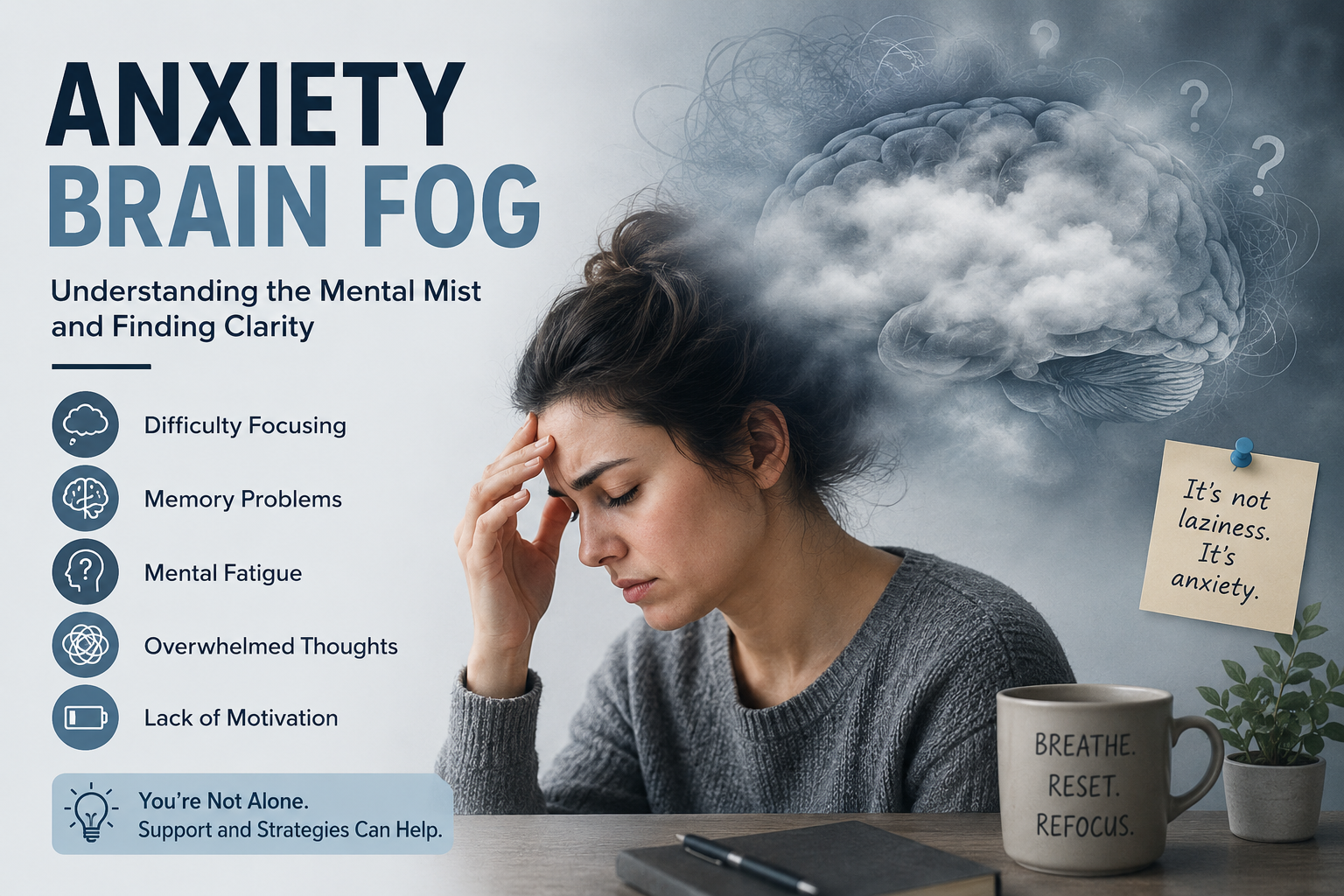
Have you ever woken up after a full night’s sleep, poured your morning coffee, and sat down at your desk, only to realize you cannot focus on a single sentence? You stare at your screen, but the words blur. You try to remember a simple task you promised to complete, but your mind feels like it is trapped in a thick, heavy mist.
This frustrating, disorienting experience is commonly known as brain fog. While many people associate brain fog with physical illnesses or lack of sleep, it is also one of the most common, yet least understood, symptoms of chronic anxiety and stress.
When anxiety shifts from a temporary worry into a long-term state of mind, it completely alters how your brain processes information. This state of mental fatigue is called cognitive exhaustion.
In this comprehensive guide, we will break down the science behind anxiety brain fog, explore its sneaky symptoms, and provide actionable, evidence-based strategies to help you clear the mist and regain your mental clarity.
The Science: Why Does Anxiety Cause Brain Fog?
1. The Hijacking of the Amygdala
In ancient times, this response was vital for survival—it gave humans the burst of energy needed to run away from predators. However, modern anxiety triggers the exact same response over non-physical threats, such as financial stress, work deadlines, or relationship issues. Because your brain cannot distinguish between a physical threat and a psychological one, it keeps the survival alarm sounding continuously.
2. Cortisol, Adrenaline, and Cortical Inhibition
High levels of cortisol actively disrupt the communication between neurons (brain cells). More importantly, it triggers a phenomenon known as cortical inhibition. To save energy for physical survival, your brain temporarily 'shuts down' or slows down functions in the prefrontal cortex—the area of your brain responsible for:
- Logical reasoning
- Working memory
- Decision-making
- Concentration
In short, when you are chronically anxious, your brain is too busy trying to 'survive' to care about where you left your car keys or how to format a spreadsheet.
3. Hypervigilance and Mental Burnout
That system lag is exactly what cognitive exhaustion feels like. Your brain is simply exhausted from over-analyzing everything.
Identifying the Symptoms of Anxiety Brain Fog
| Symptom Category | Common Experiences | How It Feels in Daily Life |
|---|---|---|
| Memory Issues | Short-term forgetfulness, misplacing items, forgetting what you were about to say. | Walking into a room and completely forgetting why you went in there. |
| Focus & Attention | Inability to read a book, getting easily distracted, struggling to follow conversations. | Reading the same paragraph four times without absorbing a single word. |
| Processing Slowness | Taking longer to reply to questions, struggling to find the right words (word-finding difficulty). | Feeling like your thoughts are moving through thick mud or quicksand. |
| Decision Fatigue | Feeling overwhelmed by basic choices like what to wear or what to eat. | Spending 20 minutes staring at a menu because making a choice feels impossible. |
| Spaced-Out Feeling | Dissociation, feeling disconnected from your body or environment. | Driving home and realizing you don't remember the last 5 miles of the drive. |
The Vicious Cycle of Anxiety and Cognitive Fatigue
[Chronic Anxiety] ➔ [Triggers Brain Fog & Forgetfulness] ➔ [You Worry Something is Seriously Wrong] ➔ [Anxiety Increases] ➔ [Brain Fog Worsens]
When you start forgetting names, making mistakes at work, or feeling disconnected, a secondary layer of anxiety develops: health anxiety. You begin to wonder, 'Is this a sign of early-onset dementia? Do I have a neurological disease? Am I losing my intelligence?'
These terrifying thoughts cause your amygdala to release even more cortisol, which further slows down your prefrontal cortex, making your brain fog even denser. Breaking this cycle requires interrupting the physical and psychological stress responses simultaneously.
5 Proven Strategies to Clear Anxiety Brain Fog Fast
1. Master the 5-4-3-2-1 Grounding Technique
Slow down your breathing and identify:
- 5 things you can see: Look around you and notice small details (a shadow, a plant, a pen).
- 4 things you can feel physically: Notice the weight of your feet on the floor, the texture of your shirt, or the cool air on your skin.
- 3 things you can hear: Listen closely for distant sounds (traffic, a clock ticking, birds chirping).
- 2 things you can smell: Try to identify scents in your environment, or smell a coffee bean or essential oil.
- 1 thing you can taste: Notice the lingering taste in your mouth, or take a small sip of water.
By focusing heavily on sensory inputs, you forcibly redirect energy away from your anxious thoughts and allow your nervous system to reset.
2. Practice "Brain-Dumping" via Journaling
Take a piece of paper and spend 10 minutes doing a literal brain dump. Write down everything that is bothering you, every task you need to do, and every irrational fear crossing your mind. Do not worry about grammar, structure, or neatness.
Once it is on paper, your brain no longer feels the pressure to constantly remember it. This instantly frees up cognitive bandwidth, giving you immediate mental relief.
3. Lower Your Daily Cognitive Load
Monotasking: Choose one single task, set a timer for 20 minutes, and do nothing else but that task. Turn off phone notifications and close extra tabs on your browser.
The Rule of 3: Write down your to-do list for the day, and then cross out everything except the top 3 most critical items. Let go of the rest for tomorrow.
Automate Minor Choices: Reduce decision fatigue by planning your meals or outfits the night before. Save your brainpower for things that actually matter.
4. Provide Nutritional & Hydration Support
Furthermore, chronic stress depletes your body of critical vitamins and minerals that protect your nervous system (learn more about what vitamin helps with stress and anxiety). Prioritize foods and supplements rich in:
- Magnesium: Known as nature’s relaxant, it helps calm the nervous system and regulates stress responses.
- Vitamin B Complex: Vital for energy production and maintaining healthy brain cells.
- Omega-3 Fatty Acids: Reduces inflammation in brain cells and supports cognitive health.
5. Utilize Evidence-Based Therapy
- Cognitive Behavioral Therapy (CBT): Learning how CBT helps with anxiety is highly effective for brain fog because it teaches you how to identify, challenge, and reframe the negative thought patterns that keep your brain in a permanent state of survival.
- Somatic Therapy: Since anxiety traps trauma and tension physically inside the body, somatic tracking exercises help release that pent-up physical stress, restoring energy back to your cognitive mind.
When to See a Professional
- Extreme, unmanageable physical fatigue that does not improve with rest.
- Sudden, severe numbness, tingling, or loss of motor coordination.
- Complete inability to comprehend speech or communicate clearly.
- Persistent memory gaps that interfere dramatically with your safety.
However, if your mental cloudiness fluctuates alongside your stress levels, rest assured that your brain is not permanently damaged. It is simply asking for a break. By implementing grounding techniques, reducing your mental workload, and seeking supportive therapy, you can successfully dissolve the fog and welcome back your sharp, vibrant, and clear mind.
Frequently Asked Questions
How long does anxiety brain fog last?
The duration of brain fog depends entirely on your stress levels. It can last for a few hours after an intense panic attack, or it can persist for weeks or months if you are dealing with chronic, unmanaged generalized anxiety disorder (GAD). Once your body’s nervous system drops out of fight-or-flight mode, the fog naturally clears up.
Is brain fog a symptom of permanent brain damage from anxiety?
No, brain fog does not cause permanent damage to your brain structure. It is a temporary, reversible protective mechanism. Think of it as a fuse tripping in an electrical circuit to prevent an overload. Once you lower your baseline stress and anxiety, your cognitive abilities return to 100%.
Can caffeine help clear anxiety-induced brain fog?
While a cup of coffee might seem like a quick fix for mental fatigue, caffeine can actually make anxiety brain fog worse. Caffeine stimulates your nervous system and triggers the release of more adrenaline. If your brain fog is caused by an overstimulated mind, adding caffeine will likely increase your anxiety, leading to a harder mental crash later.
How can I tell the difference between normal forgetfulness and anxiety brain fog?
Normal forgetfulness happens occasionally and randomly (like forgetting where you put your keys once a week). Anxiety brain fog, however, is a persistent feeling of being mentally detached, slow, or "spaced out," accompanied by physical symptoms of stress like muscle tension, shallow breathing, and rapid heart rate.